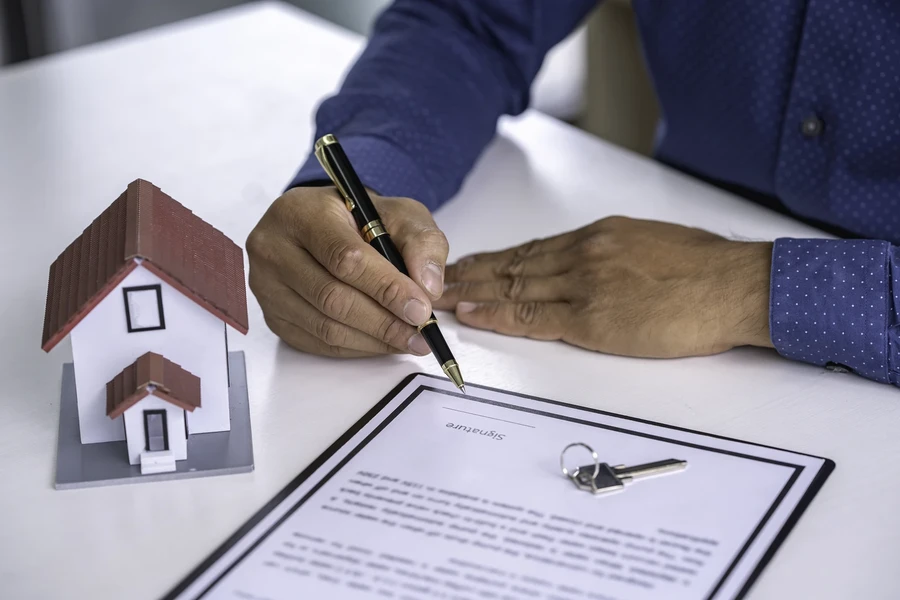
Florida uses a few main deed types. A general warranty deed promises clear title against anyone's claims, a special warranty deed covers only the seller's time as owner, and a quitclaim deed promises nothing. In Tampa, the deed is recorded with the Hillsborough County Clerk, and the type you get decides who you can turn to later.
General Warranty Deed
This is the strongest deed a Florida buyer can get, and it's the standard on a typical resale home. The seller warrants the title and agrees to defend it, and the statutory form in section 689.02 of the Florida Statutes has the seller defending it against "the lawful claims of all persons whomsoever."
That promise reaches back past the seller's own ownership to every prior owner in the chain. Our post on chain of title shows how far back that history runs and why each link in it matters.
Special Warranty Deed
A special warranty deed narrows the promise to the seller's own time as owner. The seller says they didn't create any title problems while they held the property, but they don't vouch for anything that happened before they bought it.
Banks selling foreclosed homes, builders and commercial sellers often use this deed because they don't want to stand behind the full history of a property they never lived in. It's normal, and it's one more reason an owner's title policy matters on those purchases.
Quitclaim Deed
A quitclaim deed transfers whatever interest the signer has, if any, with no promise that the interest is good. If the person signing turns out to own nothing, the person receiving the deed gets nothing, and they have no warranty claim against the signer.
Quitclaims have legitimate uses, like moving a home between spouses in a divorce, adding a family member to title or clearing up a cloud on title where someone may hold a stray interest. They're a poor fit for a sale to a stranger, and title insurers look closely at a recent quitclaim in the chain before insuring.
Other Florida Deeds You May See
A personal representative's deed transfers property out of a probate estate, and the person signing is acting for the estate under court authority. Our post on probate real estate and title issues in Tampa covers what we need before we can insure one of those sales.
A trustee's deed transfers property out of a trust, and a fiduciary deed is used by guardians and others acting for someone else. Florida also recognizes enhanced life estate deeds, which let an owner keep control during life and pass the property at death without probate.
Signing and Recording a Florida Deed
Florida requires a deed to be signed in front of two witnesses under section 689.01, and it has to be notarized before the clerk will record it. The statutory form also has a blank for the property appraiser's parcel number, which helps with indexing but doesn't replace the legal description.
In Tampa, deeds go to the Hillsborough County Clerk, which records in person at its downtown Tampa, Brandon and Plant City offices, by mail or through e-recording vendors, and its recording page lists the fees and links a deed calculator. Across the bay, the Pinellas County Clerk records deeds at its Clearwater office and St. Petersburg branch and through e-recording.
Recording the deed with the county gives public notice of the new owner, and documentary stamp tax is due when it's recorded. Our documentary stamp tax guide explains how that tax is figured on a sale.
Why Title Insurance Still Matters With a Warranty Deed
A warranty is only as good as the seller's ability to pay when something goes wrong. If the seller has moved out of state, gone out of business or passed away, collecting on that promise can be slow and expensive.
An owner's title policy puts an insurance company behind your title instead, with the duty to defend covered claims. You can estimate that cost on our Florida title insurance calculator before you decide.
Frequently Asked Questions
Can I file a quitclaim deed myself in Hillsborough County?
Yes, the Hillsborough County Clerk records deeds you bring in, mail or e-record, but its staff can't give legal advice or prepare the deed for you. The deed still has to meet Florida's recording rules, including two witnesses with their addresses, and a quitclaim promises nothing about the title it passes.
What is the difference between a warranty deed and a quitclaim deed in Florida?
A warranty deed has the seller promise the title is good and agree to defend it. A quitclaim deed transfers whatever interest the signer has with no promise at all.
Is a quitclaim deed legal in Florida?
Yes. It's commonly used between family members, in divorces and to clear up a stray interest in a property. It's a poor fit for a sale to an unrelated buyer because it carries no warranty.
Why would a seller give a special warranty deed?
Banks, builders and commercial sellers often use it because it only covers problems created while they owned the property. Buyers usually rely on an owner's title policy to cover the rest of the history.
Does a Florida deed need witnesses?
Yes. Section 689.01 requires two witnesses, and the deed also needs to be notarized before the clerk will record it.