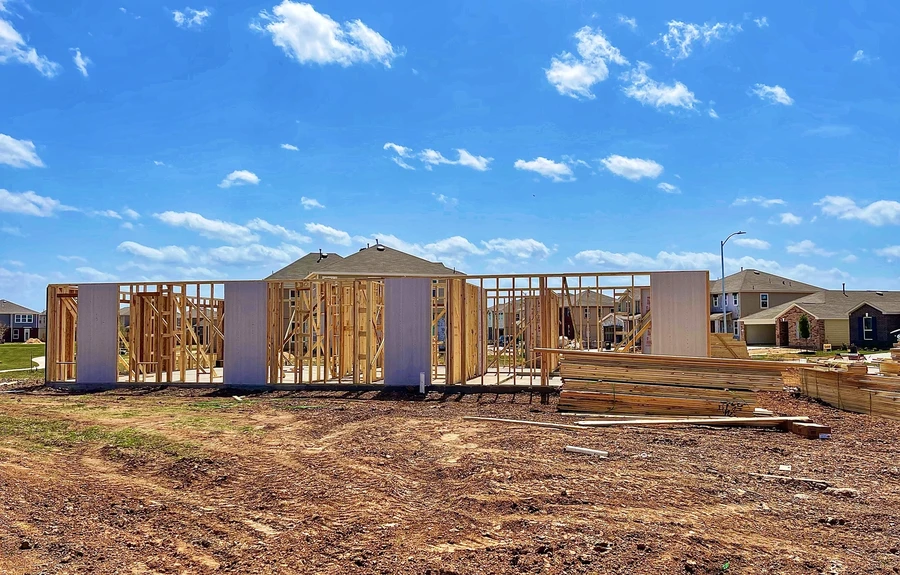
New construction in Tampa still needs a full title search. The house is new, but the land under it has a recorded history, and the build itself adds risks like unpaid contractor liens, an open notice of commencement, CDD assessments and plat restrictions. We check each one so your owner's policy covers a title that's actually clear.
Why a New House Still Has a Title History
The house is new, but the dirt under it isn't. Before a builder bought the parcel, it may have been farmland, part of an older subdivision or a lot that changed hands several times, and every one of those transfers left a record with the county clerk. When we run the search, we trace that chain of ownership the same way we would for a mid-century bungalow in Seminole Heights.
Builders also tend to buy large tracts and carve them into lots. That means your lot might be subject to easements, drainage rights or restrictions that were recorded against the whole tract long before anyone poured a slab. Our guide to a Florida title search walks through each record we pull and why it matters to you.
Construction Liens Are the Big New-Build Risk
Florida gives contractors, subcontractors and suppliers who weren't paid the right to file a lien against the property they improved. Those rules live in Chapter 713 of the Florida Statutes, and a claim of lien can be recorded up to 90 days after the lienor's final furnishing of labor, services or materials.
So a roofer or a concrete supplier could finish their part of the job, go unpaid by the builder and record a lien weeks after you've moved in. That's why we ask the builder for a final contractor's affidavit and lien releases from the subcontractors before closing, and why we read the job's paperwork to see who worked on the project.
If a lien does land on a home you just bought, our post on mechanics liens for Florida buyers covers how they're released or bonded off, and what your title policy does about it.
The Notice of Commencement and Why It Matters
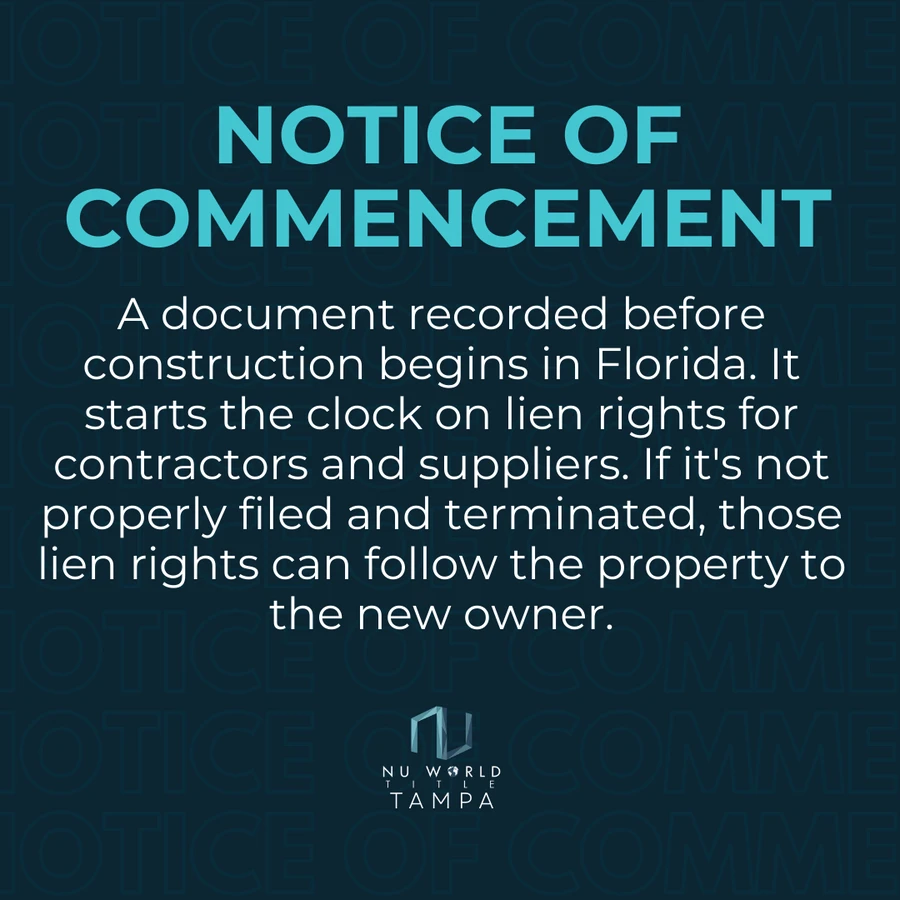
Before work starts on a Florida project, the owner records a notice of commencement with the county. It names the owner, the contractor, the lender and any surety on a payment bond, and it's the document lien claimants use to figure out who they need to notify.
Under section 713.13, a notice of commencement expires 1 year after it's recorded unless the notice states a different date. An active notice at closing can still affect who gets paid and in what order, so we make sure it's been terminated or that the builder's affidavit shows every party on the job has been paid.
CDD Fees, Plats and Deed Restrictions
New communities in places like Wesley Chapel, Riverview and Apollo Beach often sit inside a Community Development District. A CDD is a special taxing district that pays for roads, ponds and amenities, and its assessment shows up on your property tax bill for years. We flag any CDD debt tied to the lot so you know what you're taking on before you sign.
The recorded plat and the community's declaration of covenants matter just as much. They spell out setbacks, fence rules, HOA dues and utility easements, and the builder's sales office won't always walk you through them. We list those documents as exceptions in your title commitment so nothing in them surprises you after you move in.
It also helps to have a Tampa buyer's agent with you at the model home, since the friendly person at the sales desk works for the builder and represents the builder's side of the contract.
Who Picks the Title Company on a New Build
Builders often have an affiliated title company and may tie incentives to using it. You can still shop for your own title agent, and federal law bars a seller from making a specific title insurer a condition of the sale, so compare the full cost of each option before you decide.
Title insurance premiums in Florida are set by state rule, which means the real differences come down to settlement fees and how closely the title agent looks at the construction side of the file. You can estimate your premium on our Florida title insurance calculator before you sit down with the builder.
We're glad to look over a builder's purchase contract with you before you sign, especially the sections on title, closing costs and who pays for the owner's policy.
Frequently Asked Questions
Do I need title insurance on a brand-new house?
Yes, if you want your ownership protected. The house is new, but the land has a recorded history, and new construction adds risks like contractor liens. Your lender requires a lender's policy, and the owner's policy is the one that protects you.
Can a contractor put a lien on my new home after I close?
It can happen if the builder didn't pay a subcontractor or supplier. Florida's construction lien law lets a claim of lien be recorded up to 90 days after the lienor's final work on the job. That's why we collect a final contractor's affidavit and lien releases before closing.
What is a notice of commencement in Florida?
It's a document recorded with the county before construction starts that names the owner, contractor and lender on the project. Lien claimants rely on it, and an active one can affect your closing. We check that it's been handled before you sign.
Can I use my own title company when buying from a builder?
Yes, you can shop for your own title agent, and federal law bars a seller from making a specific title insurer a condition of the sale. Builders sometimes tie incentives to their affiliated company, so compare the full cost before you choose.