Inherited property in Florida clears title one of four ways, by survivorship, through a trust, by summary administration or by formal probate, and the recorded deed tells us which one applies. For a Tampa home, the probate options run through the Hillsborough County Clerk's probate department, where the Clerk's own page says most cases require an attorney.
Start With How the Home Was Held
The deed that put the decedent on title answers the first question. If it names a married couple, Florida treats them as tenants by the entirety and the survivor owns the whole house the moment the other dies. If it names two or more people and says "with right of survivorship," the same thing happens. If it names two people and says nothing, section 689.15 of the Florida Statutes makes them tenants in common, and the decedent's share goes to their estate.
A deed to a trustee means the trust controls what happens next. A lady bird deed names the remainder beneficiaries right on its face. And a deed in the decedent's name alone, which is the most common situation with an older parent, means probate of some kind.
Survivorship and Trusts Clear With a Recording
When the survivor already owns the house, the fix is a recorded death certificate and, often, a short affidavit confirming the facts. The next buyer's title search shows the original deed, the death certificate and the survivor's deed out, and the chain connects. Our post on chain of title explains why that sequence matters.
A trust works the same way with one more document. The successor trustee signs the deed out, and we need the trust certification showing who that is. Neither path goes near a courtroom, which is why so many Florida owners set them up.
The title commitment lists whatever still has to be recorded before the policy issues, so a surviving owner who sends us the deed early finds out in days what's missing.
Summary Administration for Smaller Estates
When the house was in the decedent's name alone, chapter 735 of the Florida Statutes offers the shorter route. Summary administration is available when the value of the estate subject to administration doesn't exceed $150,000, less exempt property, or when the person has been dead more than 2 years. The court enters an order distributing the property, and that recorded order is what passes title.
Homestead is treated separately. A home that was the decedent's homestead doesn't count toward the dollar limit, and the heirs typically ask the court for a separate order determining homestead status so the title examiner can rely on it.
Formal Probate When the Estate Is Larger
Everything else is formal administration. The court appoints a personal representative, creditors get notice, and the representative eventually deeds the house to the heirs or sells it from the estate. Our post on probate real estate in Tampa walks through the timeline and the documents a buyer's title company needs along the way.
For a Tampa home the case is filed with the Hillsborough County Clerk's probate department, which lists formal, summary and ancillary administration and notes that most probate matters require an attorney. Ancillary administration is the version for an out-of-state decedent who owned Florida property in their own name, a common situation with snowbird parents.
Homestead Has Its Own Inheritance Rules
Florida's constitution restricts who a homestead can be left to when the owner has a spouse or minor child. Section 732.401 fills in the default. If the owner has a surviving spouse and descendants and didn't validly devise the home, the spouse gets a life estate and the descendants take the remainder, or the spouse can elect a half interest within 6 months of the death by recording a notice of election.
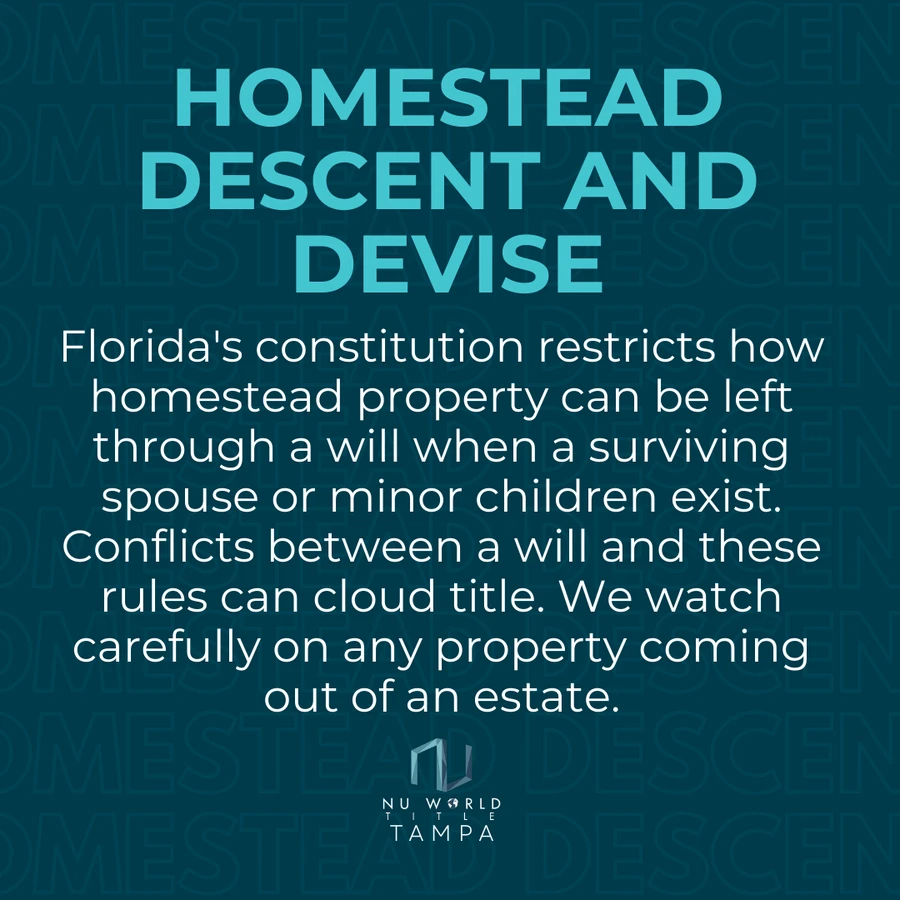
Those rules override a will that tries to do something else, which surprises families every year. A deed signed by the wrong set of heirs is a title defect, and our post on what a title defect is explains what it takes to cure one. If you've inherited a Tampa Bay home, send us the deed, the death certificate and the will if there is one, and we'll tell you which path clears it before you list.
Frequently Asked Questions
Where is probate filed for a Hillsborough County home?
In the circuit court of the county where the person lived or owned property, which for a Tampa home is the Hillsborough County Clerk's probate department. The Clerk's page says most probate cases require an attorney under Florida Probate Rule 5.030, and a will has to be deposited with the Clerk in the decedent's county of residence.
Do I need probate to sell an inherited house in Florida?
Only if the house was in the decedent's name alone with no survivorship or trust. Property held with a surviving spouse as tenants by the entirety, in joint tenancy with right of survivorship, in a trust or under a lady bird deed passes outside probate, and a recorded death certificate plus the right affidavit usually clears it.
What is summary administration in Florida?
A shorter probate under chapter 735 of the Florida Statutes, available when the estate's value subject to administration is $150,000 or less, or when the person has been dead more than 2 years. The court issues an order that passes title to the heirs without appointing a personal representative.
Who inherits a Florida homestead when there is a spouse and children?
If the owner didn't validly leave it to someone, section 732.401 gives the surviving spouse a life estate and the descendants the remainder. The spouse can instead elect an undivided half interest within 6 months of the death, by recording a notice of election in the county's official records.